Most people do not have a bad skincare routine. They have a good routine in the wrong order — and it quietly costs them half of what they paid for. The products are fine. The sequence is the problem.
Here is the whole thing, plainly, and then the reasoning underneath it.
In what order should you apply skincare?
Apply skincare thinnest to thickest: cleanser, then toner or essence, then water-based serums, then eye cream, then heavier treatments and moisturizer, and — in the morning only — sunscreen last. This lets each layer absorb before the next one seals it in.
The logic is texture, not brand. A watery essence cannot penetrate through a rich cream, so the light, water-based steps go first while the skin is bare, and the occlusive, oilier steps go last to lock everything beneath them. At Divina we build our Rituals sets in exactly this order for that reason — the sequence is the product.
The morning order (protect)
Morning skincare, in order: cleanser → antioxidant serum (vitamin C) → moisturizer → sunscreen. The morning's job is protection: antioxidants defend against daylight, and sunscreen is the non-negotiable final step.
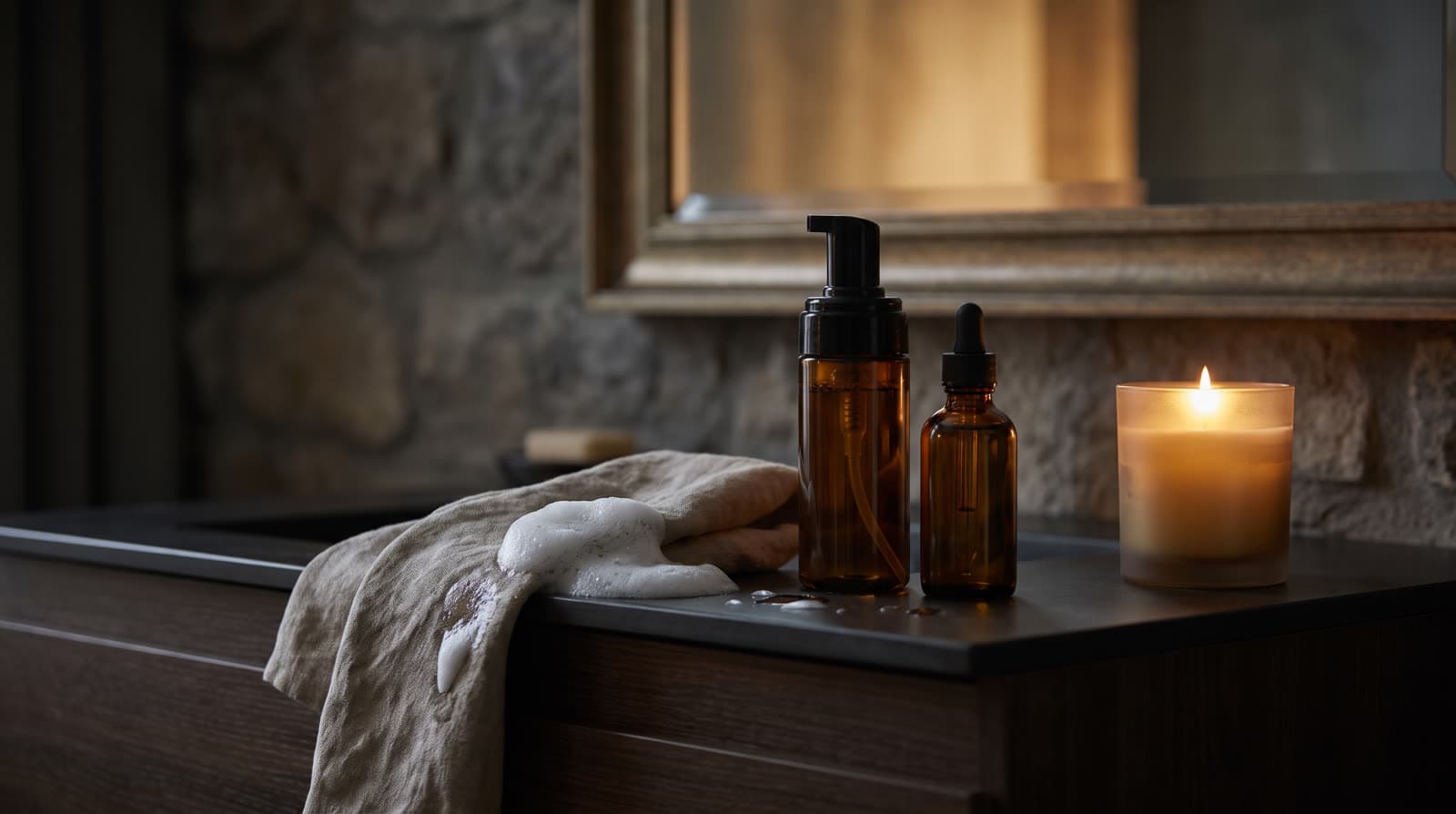
- Cleanse — a gentle wash to reset, not strip. (Le Purifiant.)
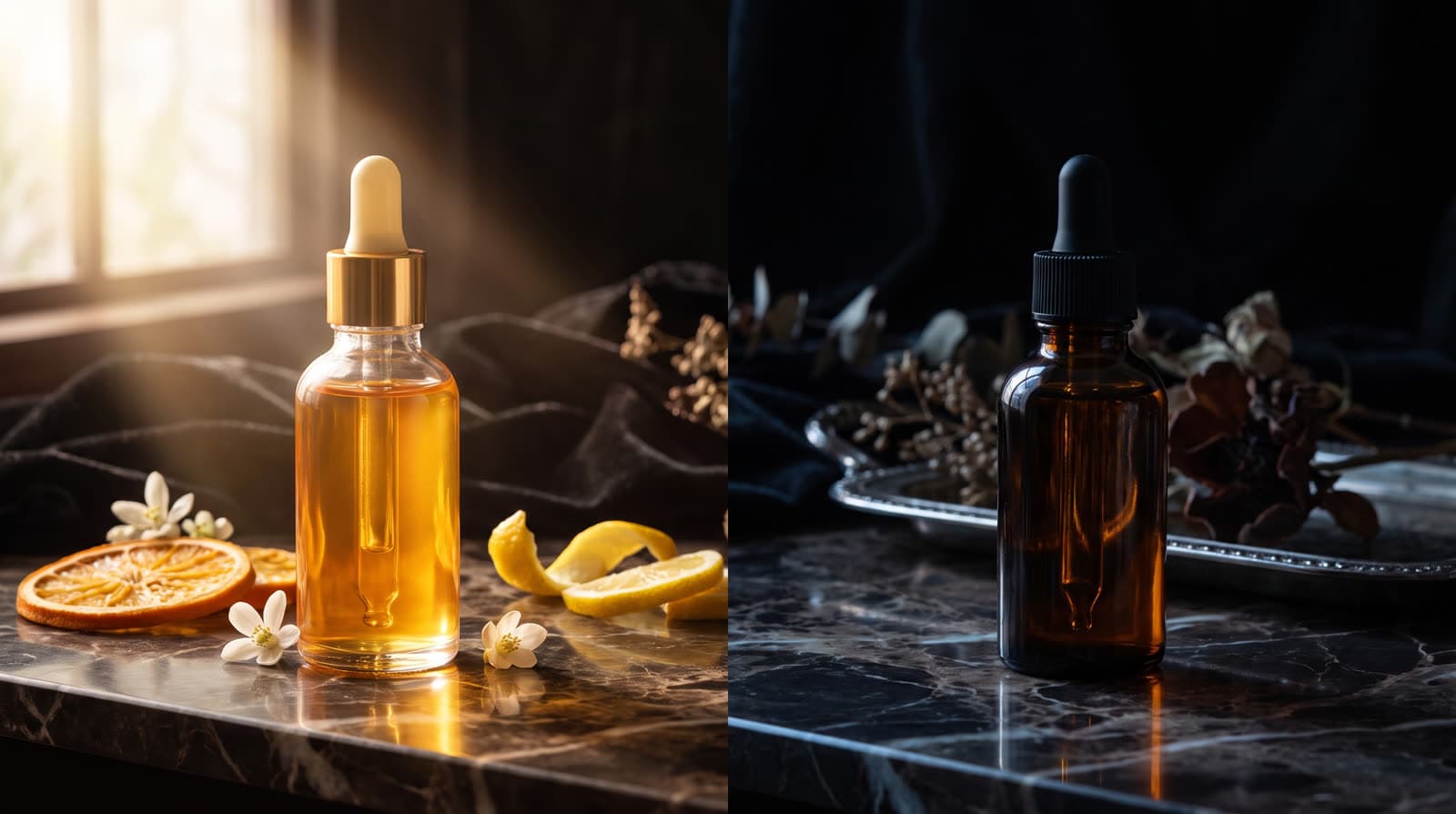
- Antioxidant serum — vitamin C to brighten and shield against environmental stress. (Lumière.) [Full guide: how to use a vitamin C serum.]
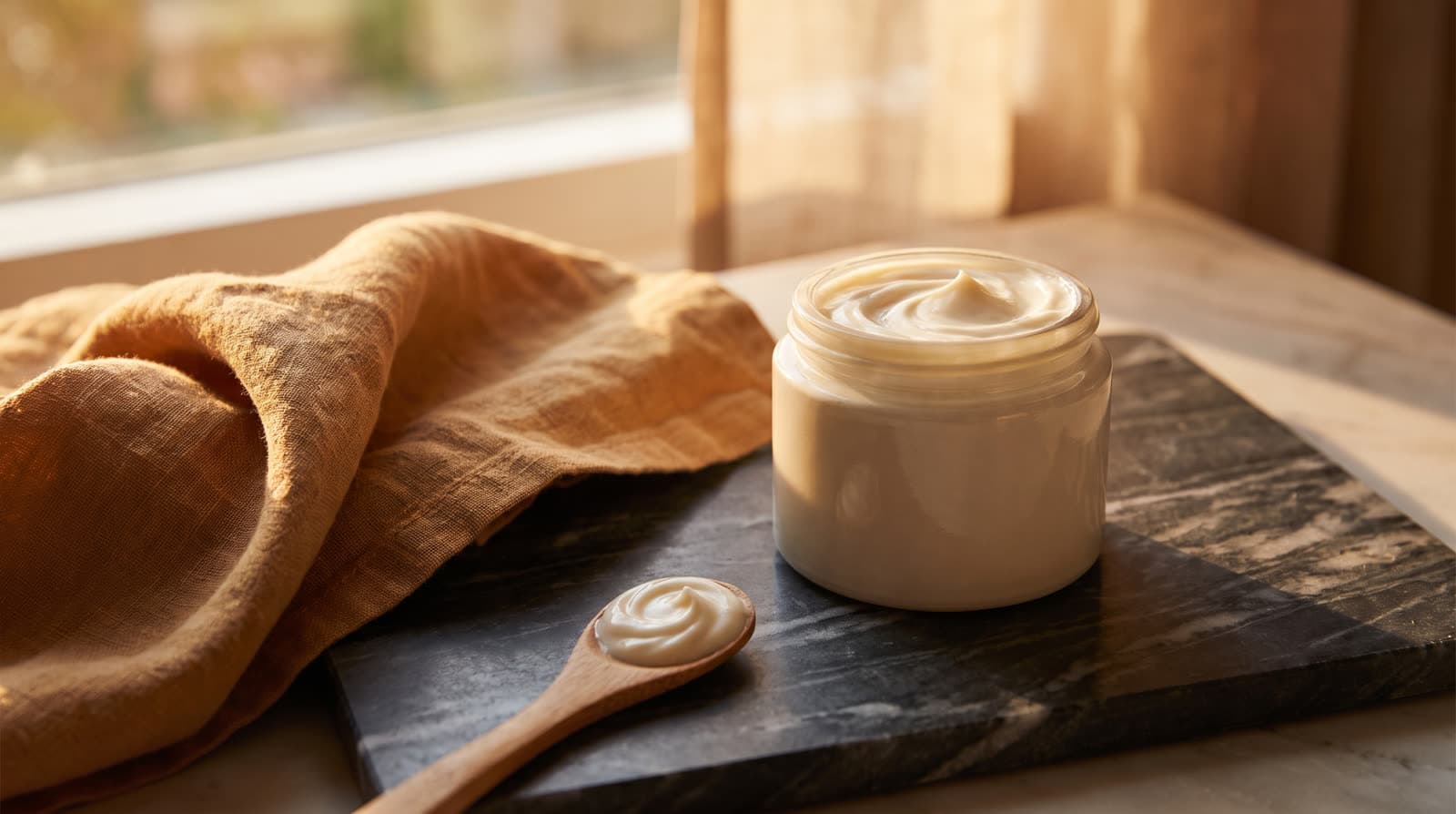
- Moisturize — hydration held in for the day. (La Crème.)
- Sunscreen — the American Academy of Dermatology recommends a broad-spectrum SPF 30+ every day, applied as the last step. Nothing you do for aging or dark spots works without it.
Divina does not yet make an SPF, so this is the one step we send you elsewhere for — honestly. Any broad-spectrum SPF 30+ you will actually wear every day is the right one.
The evening order (repair)
Evening skincare, in order: cleanse → tone/essence → treatment (retinol or exfoliating actives) → serum → moisturizer or face oil. Night is when skin repairs, so this is where the actives go.
- Cleanse — remove the day. (Double-cleanse if you wore makeup or SPF.)
- Essence / toner — refine and prepare so what follows absorbs better. (La Brume.)
- Treatment — your active. Retinol or an exfoliating serum, a few nights a week, introduced slowly. [Full guide: how to start using retinol.]
- Serum — targeted care such as peptides for firmness. (Le Peptide.)
- Seal — moisturizer, and a few drops of face oil last if your skin is dry. (La Crème.)
The one rule that decides everything: wait
Wait about 30–60 seconds between steps. Applying the next product before the last has absorbed is the single most common reason serums "pill," ball up, or seem to do nothing. The pause is not fussiness; it is the difference between absorption and waste.
You do not need to time it with a stopwatch. Apply a step, let it sink while you do the next small thing, then move on. Skin that looks slightly "grippy" rather than wet is ready for the next layer.
Where do serums, oil, and sunscreen actually go?
- Serums go after cleansing/toning and before moisturizer — thinnest ones first if you use more than one.
- Face oil goes last in an evening routine (or just before sunscreen if used in the day), because oil can seal water-based products in but water cannot get through oil.
- Sunscreen always goes last in the morning, over moisturizer, before makeup.
- Eye cream goes before your face moisturizer, patted gently around the orbital bone.
How many steps do you actually need?
A complete routine can be three steps: cleanse, treat, protect (day) or cleanse, treat, seal (night). More steps are optional refinements, not requirements — consistency with a few products beats a ten-step routine you abandon in a week.
This is the heart of how we think at Divina: the results come from the ritual kept, not the shelf accumulated. If you want the sequence decided for you, it is Le Purifiant, then Lumière, then La Crème.
FAQ
Do you apply skincare on wet or dry skin? Apply most products to slightly damp skin — it helps absorption — with two exceptions: apply retinol to fully dry skin to reduce irritation, and follow humectants like hyaluronic acid with a moisturizer to lock the water in.
How long should you wait between skincare steps? About 30–60 seconds, until each layer has mostly absorbed. Longer (a few minutes) only matters for strong actives like retinol or acids, where waiting reduces irritation.
Does the order really matter? Yes. Products are formulated to work at a certain place in the sequence; out of order, lighter products can't penetrate through heavier ones, so you lose part of the benefit you paid for.
What order for morning vs night? Morning is protect (antioxidant serum → moisturizer → SPF). Night is repair (actives like retinol → serum → moisturizer/oil). Sunscreen is morning-only; strong actives are night-only.
Where does moisturizer go? Near the end — after serums and treatments, before face oil (night) or sunscreen (morning). Its job is to seal the lighter layers beneath it.
The core three, in order: Le Purifiant, Lumière and La Crème →
<!-- SCHEMA (drop into the page as JSON-LD; see PUBLISHING-GUIDE.md) --> <!-- Article: headline=metaTitle, datePublished=date, author=Organization "Divina", about="skincare routine order" FAQPage: mainEntity = the 5 FAQ Q&As above -->
Layering is not about owning more. It is a discipline of sequence and of patience — the ritual is the active ingredient.