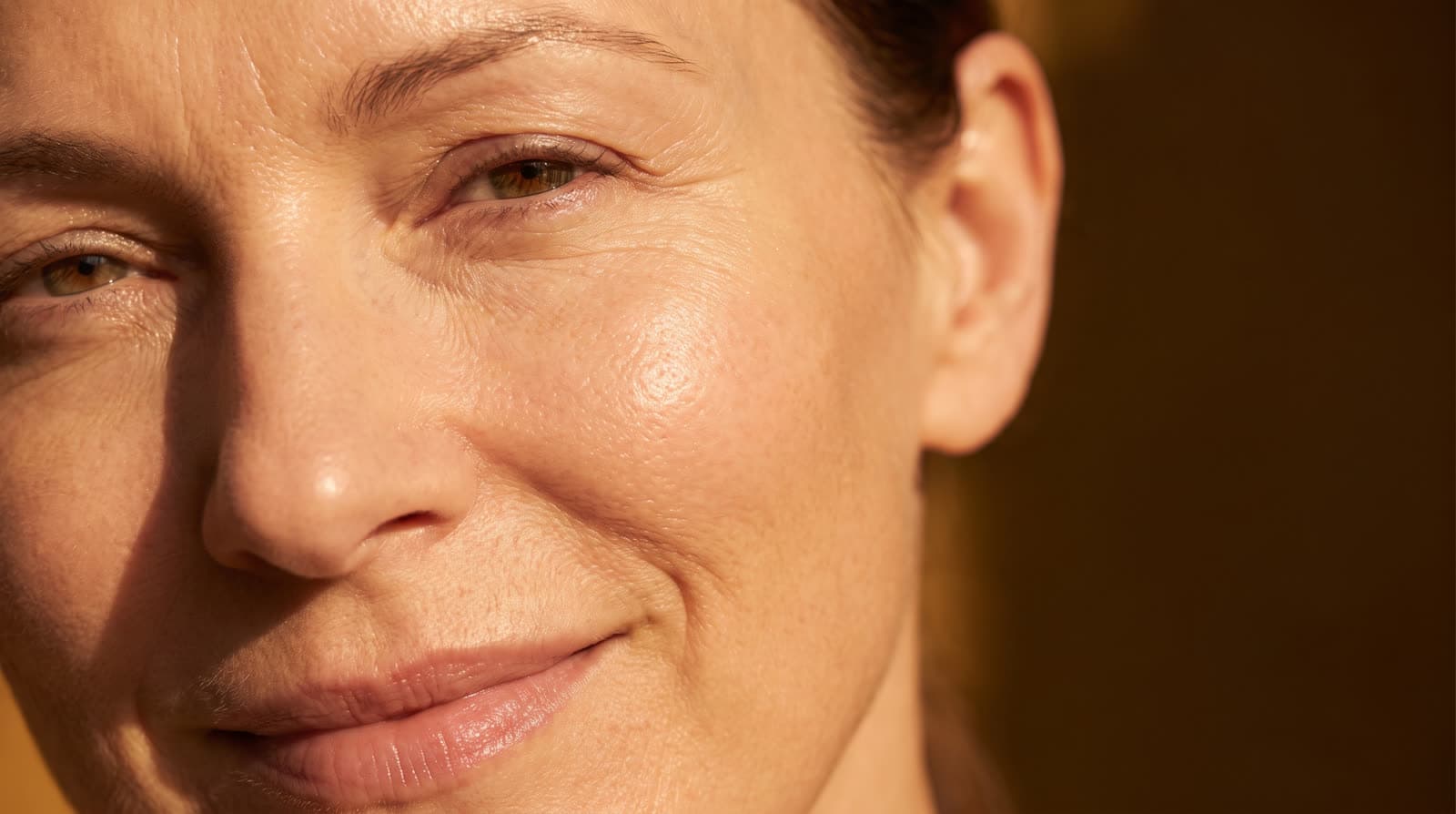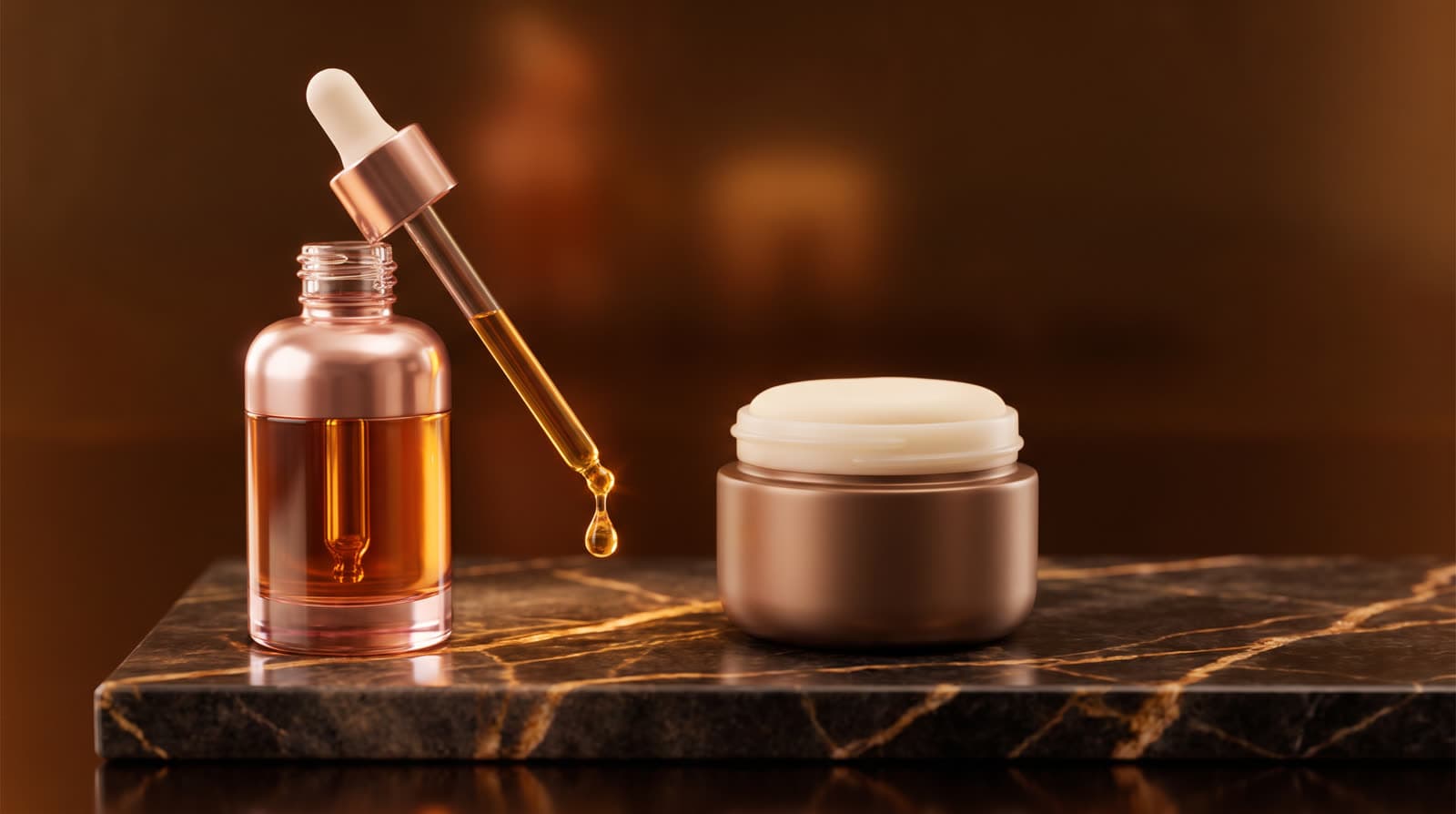
"Do eye creams actually work, or is it just an expensive moisturizer in a smaller jar?" It's a fair question, and the honest answer is: yes, but with limits worth being clear about. The eye area is genuinely different from the rest of your face, and treating it accordingly does show — as long as your expectations are realistic.
Do eye creams actually work?
Eye creams do work for hydrating the delicate eye area, softening the look of fine lines, and temporarily reducing puffiness — but they can't erase deep structural circles or replace sleep. They're formulated gentler and often with targeted ingredients like caffeine and peptides.
The skin around your eyes is the thinnest on your face, with fewer oil glands, so it dries and creases first. A dedicated formula respects that delicacy. Our Le Contour pairs peptides with hyaluronic acid for exactly this — smoother-looking eyes, honestly scoped.
Does eye cream help dark circles?
It depends on the cause. Eye cream can help circles caused by dryness or puffiness, and caffeine can temporarily reduce the look of shadow — but circles from genetics or pigmentation respond far less to any cream.
Some dark circles are essentially a shadow cast by the eye's structure, or blue-ish tones from thin skin over blood vessels; no cream changes those much. Knowing which kind you have prevents disappointment — caffeine and hydration help the fluid-and-dryness types most.
What does caffeine do in an eye cream?
Caffeine temporarily constricts blood vessels and reduces fluid, which can make under-eye puffiness and shadowing look diminished for a while. The effect is real but short-lived — a fresher morning look rather than a permanent change.
That's why caffeine eye products feel most useful in the morning, and why pairing caffeine with peptides is a sensible combination. Le Contour is not that pairing, and we should say so here rather than let the paragraph imply it: there is no caffeine on its list. It pairs peptides with resveratrol, CoQ10 and hyaluronic acid — the slower half of the job, with nothing for this morning's puffiness. If caffeine is what you want, buy a formula that has it.
Do you actually need a separate eye cream?
Not strictly — you can use a gentle facial moisturizer around the eyes. But a dedicated eye product is formulated to be lighter, less likely to sting, and targeted, which many people prefer for that delicate area.
If your regular moisturizer is gentle and non-irritating, it can do the job. An eye cream is a refinement, not a requirement — worth it if you have specific concerns like puffiness, crepiness, or sensitivity there.
Can an eye cream cause milia?
It can contribute. Milia are tiny keratin cysts that sit just under the surface, and while nobody can hand you a formula that promises never to cause one, rich, occlusive textures applied heavily to thin skin are the usual suspicion — too much product, too close to the lash line, night after night.
No brand should tell you its eye cream is milia-proof, so here is the list instead. Le Contour is a cream, not a gel: alongside the peptides it carries caprylic/capric triglyceride, castor seed oil, cetyl alcohol and dimethicone. If you are prone to milia, that is worth knowing before you buy, and the honest advice is the same as the general advice — a small amount, patted on the orbital bone rather than pushed toward the lashes, and less on the nights your skin feels congested rather than more.
Do men need a different eye cream?
No. Eyelid skin is the thinnest on the face for everybody, it thins with age for everybody, and it responds to hydration and gentleness the same way regardless of who is wearing it. A separate men’s eye cream is a marketing category, not a formulation one.
What does differ is habit rather than biology: skin that is shaved is already being handled more, and people new to skincare tend to apply far too much of everything. Less product, patted not rubbed, is the whole technique either way.
How do you apply eye cream properly?
Use a rice-grain amount per eye, and pat it gently along the orbital bone (the ring of bone around the eye) with your ring finger — never rub or drag. Applying too close to the lash line can cause migration and irritation.
The ring finger is the weakest, so it applies the least pressure — ideal for skin this fragile. Gentle patting, not rubbing, is the whole technique. Morning to smooth the area before makeup; night for hydration and peptides while skin repairs.
FAQ
When should you start using eye cream? Whenever you notice dryness, fine lines, or puffiness there — often in the late 20s or 30s, but it's useful at any age. Prevention (hydration and gentleness) is easier than correction.
Does eye cream help puffiness and bags? It can temporarily reduce the look of puffiness, especially formulas built on caffeine — ours has none — and hydration softens crepiness. Structural "bags," however, are largely genetic or fat-related and do not really respond to cream. True under-eye bags — the structural kind, where fat pads have shifted rather than fluid gathered — are a surgical question, not a skincare one, and any cream promising to remove them is selling you something.
Can I use retinol or vitamin C around my eyes? Only in formulas made for the eye area, and carefully — the skin is thin and reactive. A dedicated eye product is the safer route than taking strong facial actives right up to the lash line. One thing to know about ours: Le Contour's list includes retinyl palmitate, the mildest retinoid — so if you are avoiding retinoids, it is not your eye cream, and /retinoid-free names the pieces that have none.
Morning or night for eye cream? Both, ideally: morning for a fresh look under makeup (and, in a caffeine formula, its de-puffing), night for hydration and peptides while skin repairs.
Why isn't my eye cream working on dark circles? Likely because your circles are from genetics or pigmentation rather than fluid or dryness — those types respond little to any cream. Caffeine and hydration help the puffiness/dryness types most.
Divina's peptide eye cream, for the first place it shows: Le Contour →
<!-- SCHEMA: Article + FAQPage (mainEntity = the 5 FAQ items). See PUBLISHING-GUIDE.md -->
Further reading
- American Academy of Dermatology (AAD)
- Cleveland Clinic — Health Essentials
An eye cream won't erase a late night. But the eye area is delicate enough that how you treat it, gently and daily, genuinely shows.