Let's be honest up front: Divina doesn't make a sunscreen yet. That's exactly why we can tell you the truth about it without selling you one — daily sun protection matters more than any serum, oil, or cream we do sell, and no anti-aging routine works without it. If you take one habit from this whole Journal, make it this.
Why is sunscreen the most important skincare step?
Sunscreen is the most important step because most visible skin aging — fine lines, dark spots, dullness, loss of firmness — is caused by cumulative UV exposure. Protecting skin from the sun does more for its long-term look than any anti-aging product, and it protects the results of everything else you use.
Retinol, vitamin C, brightening serums — they all fight problems the sun creates and re-creates daily. Without protection, you're treating with one hand and re-damaging with the other. Sunscreen is what lets the rest of your routine actually add up.
Do you need to wear sunscreen every day?
Yes — daily, year-round, rain or shine. UVA rays (the ones most linked to aging) pass through clouds and windows and don't take days off. Dermatologists recommend a broad-spectrum SPF 30 or higher applied every morning as the last step of your routine.
"It's cloudy" and "I'm inside mostly" are the two most common reasons people skip it — and both let aging UVA through. Daily is daily.
Do you need sunscreen indoors and in winter?
Yes, if you're near windows or outdoors at all — UVA passes through glass, and winter sun (and snow glare) still carries UV. If you spend the entire day away from any window, the need is lower, but daily application builds the habit that protects you the days you do go out.
Most people's exposure is a patchwork — a commute, a window seat, errands. Wearing it daily removes the guesswork.
How much sunscreen should you apply to your face?
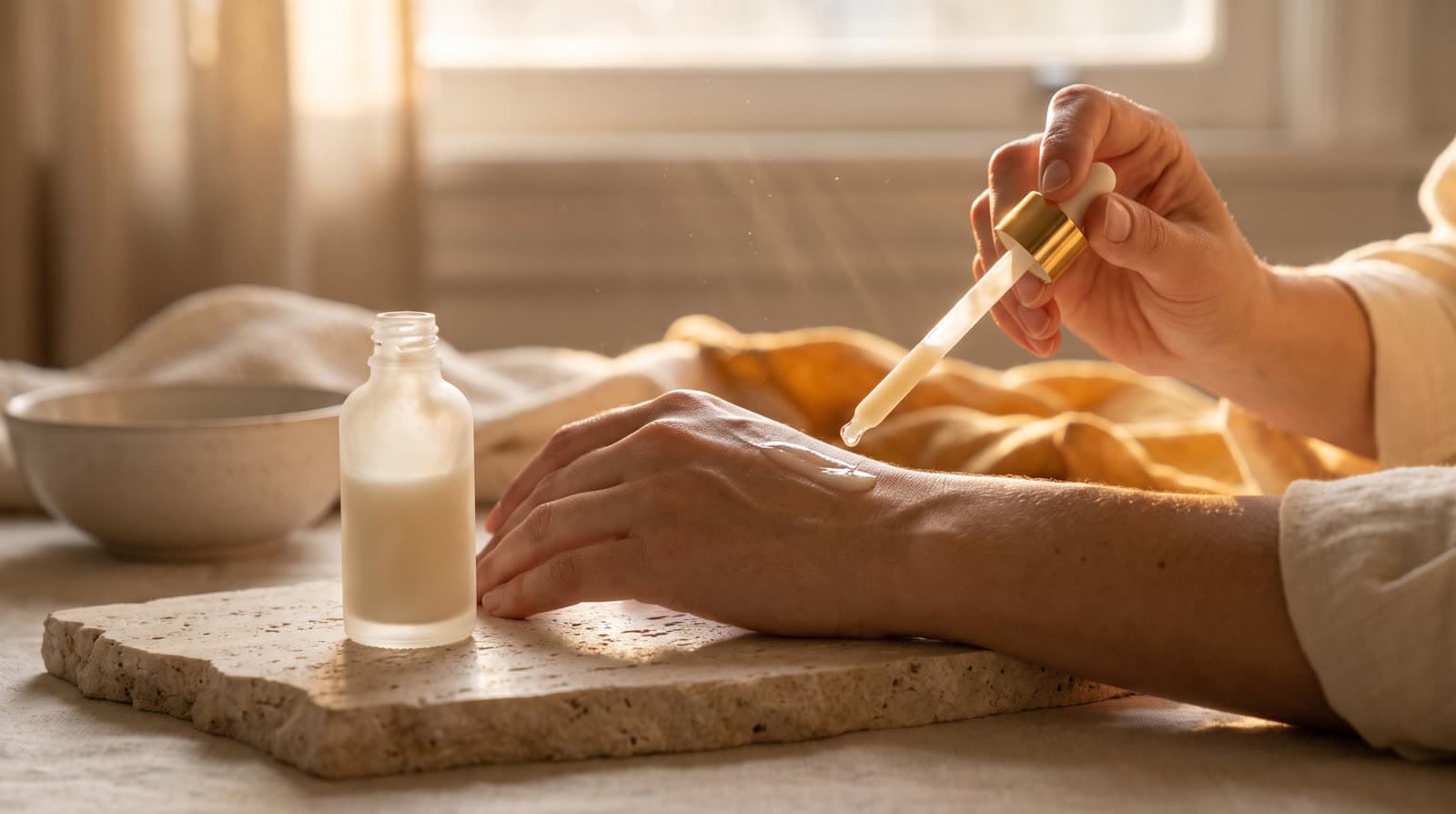
Use about a two-finger length (or roughly ¼ teaspoon) for the face and neck — most people apply far too little, which drops the real protection well below the SPF on the label. Apply it as the last morning step, over moisturizer, before makeup, and reapply if you're outdoors for long stretches.
Under-applying is the silent failure: half the amount gives you far less than half the SPF. Be generous.
How does sunscreen fit with the rest of your routine?
Sunscreen goes last in the morning routine — after cleanser, antioxidant serum, and moisturizer. It pairs especially well with a morning antioxidant serum like vitamin C: the antioxidant neutralizes daily stress, and sunscreen blocks the UV — together they're your complete daytime defense.
That pairing — Lumière in the morning, then a broad-spectrum SPF over your moisturizer — is the protective half of a good routine. [See: the order of skincare.]
FAQ
Does sunscreen really prevent aging? Yes — since most visible aging is UV-driven, daily broad-spectrum sunscreen is the single most effective anti-aging step, outperforming any serum. It also protects the results of your other products.
What SPF should I use daily? Broad-spectrum SPF 30 or higher for daily use, applied generously and reapplied if you're outdoors for long periods. "Broad-spectrum" means it covers both UVA (aging) and UVB (burning).
Can I skip sunscreen if my makeup or moisturizer has SPF? Only if it's broad-spectrum SPF 30+ and you apply enough — and most people don't apply makeup/moisturizer thickly enough to reach the labeled SPF. A dedicated sunscreen step is safer.
Does Divina sell a sunscreen? Not yet — which is why we'll honestly point you to any broad-spectrum SPF 30+ you'll actually wear every day. The best sunscreen is the one you use consistently.
When should I reapply sunscreen? Roughly every two hours when outdoors, and after swimming or heavy sweating. For a mostly-indoor day, a generous morning application is the priority.
Pair your daily SPF with morning antioxidant protection: Lumière →
<!-- SCHEMA: Article + FAQPage. HONESTY: Divina sells no SPF — this article deliberately points elsewhere; keep it that way unless/until an SPF exists. See PUBLISHING-GUIDE.md -->
Further reading
Every serum you own works better under sunscreen — and half of them barely work without it. It is the quiet foundation the whole routine stands on.