Lip skin is thinner than facial skin, has almost no oil glands of its own, and is exposed to weather, food, drink and constant movement. It cannot look after itself the way the rest of the face does — which is why the reflex of applying more balm, more often, rarely ends the cycle.
The reason balm alone fails is that it is one step of three. It seals, which is exactly what you want, but sealing over flaking gives you sealed flakes. If lips are rough, the balm has nothing smooth to sit on.
The rhythm is the same as any good skincare routine, scaled down. Exfoliate gently once or twice a week — a soft sugar-based scrub, thirty seconds, no scrubbing hard. Treat, with a proper lip treatment rather than a waxy stick, ideally at night when nothing rubs it away. Seal, through the day, as often as lips ask for it.
A few things that quietly make it worse: licking your lips, which evaporates and takes moisture with it. Matte long-wear formulas worn daily without a treatment underneath. Breathing through your mouth on cold nights. And picking at flakes, which turns a dry lip into a healing one.
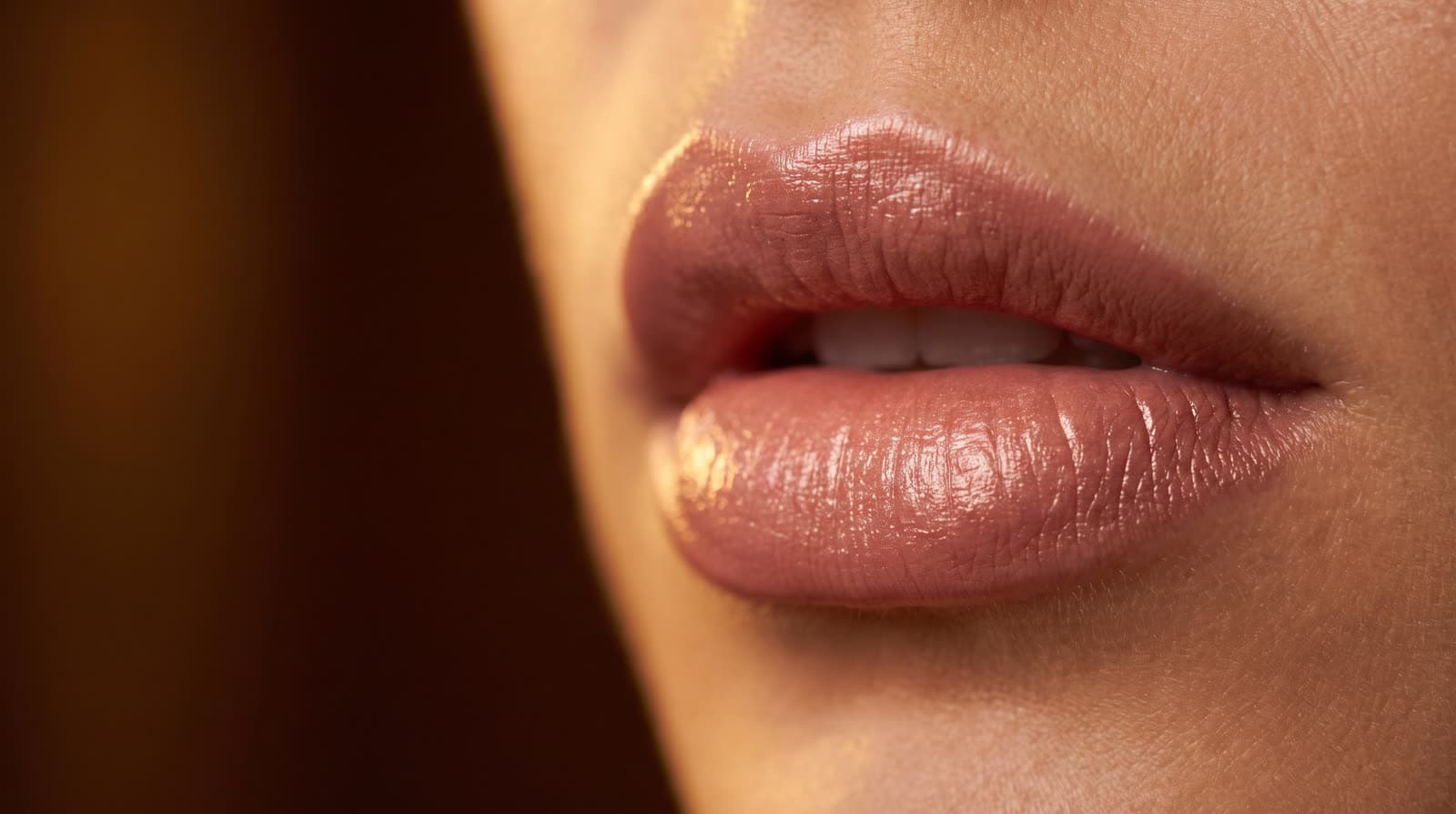
If you wear colour, the payoff is immediate and visible. Scrub, then treat, then blot, then apply. Lipstick applied over smooth lips reads as even and intentional; the same lipstick over flakes catches on every one of them. Most complaints about a lipstick’s texture are actually complaints about the surface underneath it.
Give it a fortnight of the full rhythm before deciding whether it works. The cycle of dryness took longer than that to establish.
Balm that only ever soothes is a loop, not a routine. Lips need the same three steps skin does.