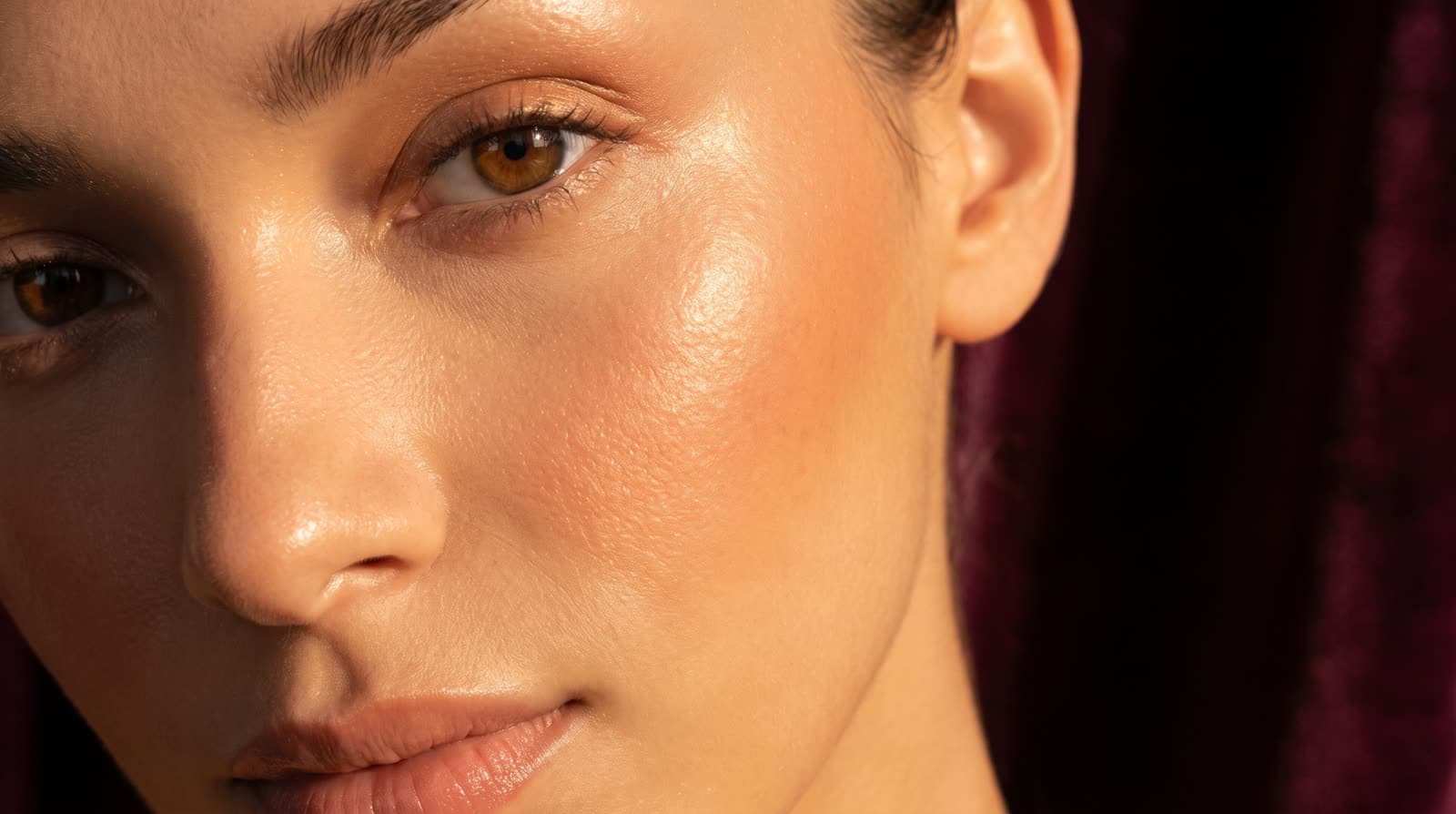
Blush is the single fastest way to look healthy and awake — a good flush does more than concealer some mornings. It's also the easiest thing to overdo, which is why so many people skip it. The trick is entirely in where you place it and how softly you blend, not in how much pigment you pack on.
How do you apply blush so it looks natural?
Smile, apply a small amount of blush to the apples of your cheeks, then blend up and back toward your temple. Build in thin layers and keep it soft — natural-looking blush is about a gentle wash of colour high on the cheek, not a defined stripe.
The "smile to find the apples" trick works because it shows you where colour naturally rises. Tap off excess before you apply, place it high, and blend the edges so there's no hard line. Our Le Blush is buildable — start light, add if needed.
Where do you apply blush for your face shape?
Placement shifts slightly by face shape: round faces benefit from blush swept higher and angled toward the temple (to lift and lengthen); long faces from blush kept more horizontal across the apples; oval/heart shapes suit blush on the apples blended toward the cheekbone.
The general rule holds for everyone — apples, blended up and out. The face-shape tweaks are refinements: higher and angled to slim, more horizontal to shorten. Keep it above the "smile line," never below.
Should you use cream or powder blush?
Cream blush gives a dewy, skin-like finish and suits dry or mature skin; powder blush gives a soft-matte finish, lasts a little longer, and suits oily skin. Cream goes on before powder products; powder goes on after.
If layering both, cream first (over foundation, before powder) then a touch of powder blush on top locks it in. For a natural glow, many people prefer cream alone, tapped on with fingertips.
How much blush should you apply?
Less than you think — tap most of the product off the brush first, apply a light layer, and build up only if needed. It's far easier to add more than to fix an over-applied cheek.
Over-application is the number-one blush mistake. One light pass, assess, then decide. A sheer wash reads as a natural flush; a heavy one reads as makeup.
How do you make blush last all day?
Apply blush over a set base, layer cream-then-powder if needed, and keep the amount light — heavy blush fades patchier than a thin, well-set layer. A cream blush under a matching powder blush is the longest-wearing combination.
Setting the complexion first gives the blush something to hold onto. For extra staying power, cream on skin → light powder blush on top → optional whisper of highlighter (L'Enlumineur) on the cheekbone above it.
FAQ
Where exactly do you put blush? On the apples of the cheeks (where you flush when you smile), blended up and back toward the temple. Keep it above the smile line and blend the edges so there's no hard stripe.
Is cream or powder blush better for beginners? Cream blush is often easier for beginners — you can tap it on with fingertips and it's hard to overdo if applied in thin layers. Powder needs a light hand and a good brush to avoid patchiness.
How do I fix too much blush? Blend it out with a clean brush or a little foundation/setting powder patted over the top to soften it. Prevention is easier: tap off excess and build gradually.
Do you apply blush before or after bronzer? Usually bronzer first (to warm and add dimension), then blush on the apples, then highlighter. But order is flexible — the goal is a blended, natural gradient of colour.
Why does my blush disappear during the day? Often because it was applied over an un-set or oily base, or too sparingly. Set your complexion first, and try a cream-under-powder layer for longer wear.
Divina's silky, buildable blush for a natural, lit-from-within flush: Le Blush →
<!-- SCHEMA: Article + FAQPage. See PUBLISHING-GUIDE.md -->
The right blush doesn't look like blush. It looks like you just came in from the cold — placed high, blended soft, kept light.